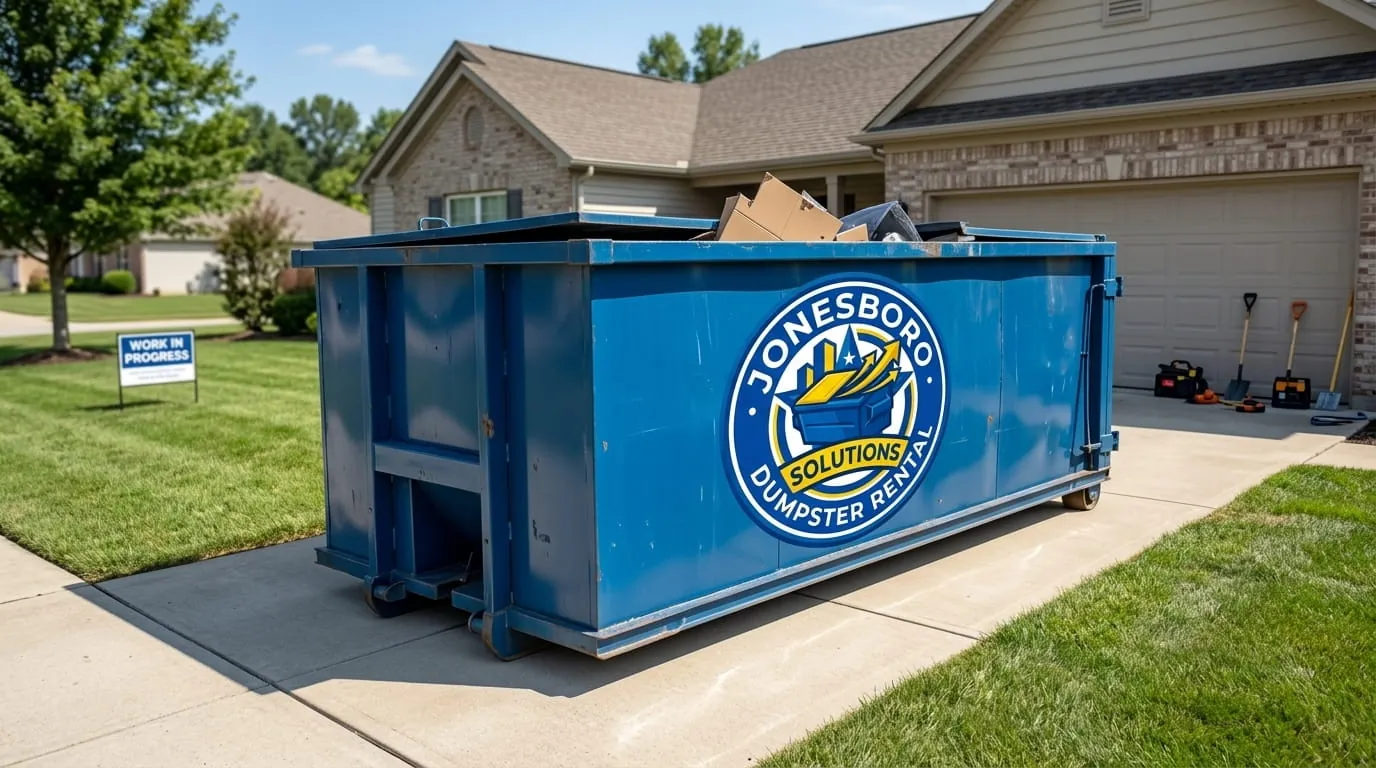
Construction and demolition (C&D) debris is the single largest waste stream most Jonesboro contractors touch, and it is also the one most likely to cost you money you never budgeted for. A framing crew, a tear-off, and a kitchen gut each produce a different mix of materials, and each mix has its own weight, its own recycling path, and its own set of rules under Arkansas Department of Environmental Quality (ADEQ) regulations. With Craighead County riding a wave of new subdivisions, ASU-area builds, and retail construction, the volume of debris leaving Jonesboro job sites has never been higher. Handling it well is no longer a nicety. It is margin.
This guide walks through the practical mechanics of construction debris disposal on the flat Delta lots common around Jonesboro, from sorting your waste stream to choosing the right container, respecting weight limits, and diverting material for LEED credit or basic recycling. It is written for the people actually running the job, not for a compliance binder.
Know Your Waste Stream: The Six Materials That Fill Every Dumpster
Before you rent a single container, you need to understand what your job actually produces. C&D waste in the Jonesboro area breaks down into a handful of recurring materials, and how you handle each one determines whether your disposal costs stay predictable.
- Drywall (gypsum board): Bulky and light on its own, but scrap gypsum is heavy in volume and can create sulfur issues in wet landfill conditions. New-construction offcuts are cleaner and easier to divert than demo drywall coated in paint and joint compound.
- Lumber and dimensional wood: The backbone of framing waste. Clean, untreated cutoffs are recyclable and can even be chipped for mulch. Painted, treated, or engineered wood (LVL, OSB with adhesives) is a different category and usually cannot be recycled the same way.
- Brick and masonry: Heavy, inert, and a weight-limit killer. Whole brick can often be reclaimed; broken masonry is inert fill.
- Concrete: The densest material you will ever load. A single half-full bin of concrete can exceed the weight a hauler will legally carry. Concrete belongs in a dedicated container almost every time.
- Roofing (asphalt shingles): A tear-off is deceptively heavy. One square of three-tab shingles runs roughly 230 to 250 pounds, and a full re-roof can put several tons in a bin before you have filled a third of the volume.
- Siding: Vinyl, fiber cement, and metal siding are light by weight but awkward by volume, and each recycles through a different channel. Fiber cement in particular is inert and dense in the offcut pile.
The lesson every seasoned Jonesboro GC learns: volume and weight are two different problems. A container can be visually half empty and already over its weight allowance. That is the trap that turns a flat rental rate into a surprise per-ton overage.
Separate Heavy Inert Debris From Everything Else
The most expensive mistake on a job site is mixing heavy inert materials (concrete, brick, block, dirt, asphalt) with light mixed C&D (wood, drywall, cardboard, insulation). Here is why it matters so much in practice.
Roll-off dumpsters have two limits: a volume rating in cubic yards and a weight allowance in tons. Mixed C&D disposal is priced assuming a relatively light load per cubic yard. When you throw concrete or dirt into a mixed bin, you blow through the weight allowance long before the box is full, and you pay overage on top of the rental. Worse, many haulers and transfer facilities will not accept a mixed load that is contaminated with large volumes of inert material, because it complicates their own downstream sorting and tipping fees.
The fix is straightforward: run dedicated bins for heavy inert debris. A dedicated concrete and heavy debris container is sized and priced for that density, and it keeps your mixed C&D bin light and cheap. On a demolition job where you are generating both, stage two containers side by side and brief the crew on which goes where. It sounds obvious, but a five-minute tailgate talk on day one saves hundreds in overages by week two.
Why Concrete and Dirt Need Their Own Bins
Concrete weighs roughly 4,000 pounds per cubic yard. Clean fill dirt runs about 2,000 to 2,700 pounds per cubic yard depending on moisture, and Delta clay soils around Jonesboro hold water and get heavier fast after rain. Do the math on a 20-yard box: fill even a third of it with concrete and you are already carrying two tons. This is exactly why the industry uses smaller dedicated containers for these materials. A 20-yard dumpster is often the largest size a hauler will allow you to fill with pure concrete or dirt, and even then it goes out well short of the fill line. Trying to load heavy inert material into a 30-yard dumpster almost always means the truck cannot legally lift it off the ground.
Weight Limits and How They Actually Work
Every roll-off rental in the Jonesboro market comes with an included tonnage, and every pound over that is billed at a per-ton overage rate. Understanding this changes how you plan a job:
- Estimate by material, not by eye. Use rough weights: one square of shingles ~240 lbs, a cubic yard of concrete ~4,000 lbs, a cubic yard of mixed C&D ~350 to 500 lbs, a cubic yard of drywall ~500 lbs.
- Keep inert loads low. For concrete, brick, and dirt, plan on filling a smaller bin only partway. That is normal, not wasteful.
- Do not top off a heavy bin. The temptation to squeeze one more load of block into a concrete bin is how trucks get red-tagged at the scale.
- Talk to your hauler up front. Tell us what the job produces before the container drops. A quick call to our team gets you the right size and the right tonnage the first time.
What Recycles in the Jonesboro Area
Diversion is not just a green talking point; it can lower disposal cost and it is increasingly required on commercial and public work. In the Craighead County and Northeast Arkansas region, several C&D streams have real recycling or reuse paths:
- Clean concrete, brick, and block can be crushed into recycled aggregate for base and fill. Local crushing operations and site-reuse (crushing on the parcel for driveway base on larger subdivision jobs) keep it out of the landfill entirely.
- Scrap metal (rebar, flashing, ductwork, copper, aluminum siding, wiring) has real salvage value at area scrap yards. Pull it before the bin, not after.
- Clean dimensional lumber can be chipped for mulch or reclaimed for reuse. Keep it dry and separate from painted or treated wood.
- Cardboard and clean packaging from new-construction deliveries recycle easily and take up disproportionate volume, so pulling them keeps your C&D bin efficient.
- Asphalt shingles can be recycled into road paving material where a regional processor accepts them; availability shifts, so confirm before you commit a tear-off to diversion.
The practical move on a Jonesboro job is source separation: pull the high-value, high-volume, or easily recycled materials into their own piles or bins as they are generated, and let the truly mixed leftovers go to the mixed C&D container. Source separation is faster and cleaner than trying to sort a full commingled bin later, which almost never happens on a busy site.
Job-Site Container Logistics on Flat Delta Lots
One genuine advantage of building in the Jonesboro area is terrain. The flat, open subdivision lots across Craighead County make roll-off placement easy compared to hillside or urban-infill work. Use that to your advantage:
- Stage for the loader and the crew. On a flat pad you can position the container within easy reach of the framing zone or tear-off, minimizing carry distance. Less carry means fuller bins and fewer thrown-over-the-side messes.
- Protect new driveways and turf. Delta lots are flat but soft, especially after rain. Ask for wood cribbing or plywood under the container to keep steel wheels from sinking into fresh subgrade or cracking a new driveway.
- Plan for two bins when the job warrants. On new subdivision builds you often have room to stage a mixed C&D box and a dedicated heavy-debris box side by side without crowding the lot. That is the cheapest possible sorting setup.
- Keep swap access clear. When you order a swap-out, make sure the truck has a straight, unobstructed pull. On tight ASU-area or retail sites, coordinate delivery windows so the roll-off truck is not fighting subs and material deliveries.
For a straightforward framing or remodel job, a single construction dumpster rental handles the mixed stream. For demolition or heavy renovation, pairing it with a demolition debris service keeps the inert material segregated from the start.
Diversion and LEED Basics for Commercial Work
If you are chasing commercial, institutional, or ASU-adjacent work around Jonesboro, C&D diversion is increasingly written into the specs. Under LEED, the Construction and Demolition Waste Management credit rewards diverting material from disposal by weight or volume, typically through recycling and reuse. Two things make or break that credit on the ground:
- Documentation. You need weight tickets and diversion reports showing tonnage recycled versus landfilled. Work with a hauler who can provide the tickets and, where possible, a diversion summary.
- Separation strategy. Source-separated recycling almost always outperforms commingled sorting for both diversion rate and paperwork clarity. Decide at preconstruction which streams you will separate and label the bins accordingly.
Even on private residential work where LEED is not in play, tracking diversion is smart business: it lowers tonnage to the landfill, and landfill avoidance is real dollars when your load is heavy inert material.
Staying Compliant: ADEQ Rules and Local Craighead County Facilities
Arkansas regulates solid waste through ADEQ, and C&D debris has to go to a permitted facility. The core compliance points for a Jonesboro contractor:
- Use permitted disposal only. C&D waste must go to a permitted Class 4 C&D landfill, a permitted municipal landfill, or a licensed transfer station. Dumping on the parcel, in a ravine, or in an unpermitted pit is an ADEQ violation with real penalties.
- No open burning of construction debris. Arkansas restricts open burning, and burning treated wood, shingles, or mixed C&D is prohibited. It is not worth the fine or the neighbor complaint on a visible subdivision lot.
- Handle regulated materials correctly. Asbestos-containing material (common in pre-1980s renovation and demo) triggers ADEQ notification and licensed abatement rules. If you suspect asbestos in a tear-off, stop and test before it enters a dumpster. The same caution applies to lead paint debris.
- Keep your tickets. Scale tickets from the transfer station or landfill are your proof of legal disposal. On commercial jobs they are also your diversion documentation.
Craighead County is served by regional solid waste management district facilities, including a municipal landfill and transfer stations that accept C&D loads. When you rent a roll-off from a local provider, the hauler handles the trip to the permitted facility and the tipping fees, which is one less compliance headache on your plate. A roll-off dumpster rental is the simplest way to keep your disposal chain clean and documented from job site to scale house.
Putting It All Together
Efficient construction debris disposal in Jonesboro comes down to five habits: know your waste stream before the container drops, separate heavy inert debris into its own bin, plan around weight limits instead of just volume, pull recyclables at the source, and keep every load headed to a permitted ADEQ facility with a ticket to prove it. Do those five things and disposal stops being a wild card in your budget and becomes a line item you can actually forecast. For a deeper look at what is allowed in a container, our guide on what can go in a dumpster covers the material-by-material rules.
Jonesboro Dumpster Rental Solutions works with GCs, remodelers, and demo crews across Craighead County and the surrounding Delta communities. We match the container and tonnage to your actual job, drop it clean on your flat lot, and take it to a permitted facility with the paperwork you need. Ready to line up the right bins for your next build? Contact us or call (870) 604-3848 to talk through your job today.

Owner, Jonesboro Dumpster Rental Solutions — sharing straight advice from years of local hauling across Jonesboro and Craighead County.
Frequently Asked Questions
Do I need separate dumpsters for concrete and mixed construction debris?
Almost always, yes. Concrete weighs about 4,000 pounds per cubic yard and will blow through the weight allowance on a mixed C&D bin long before the box is full, triggering per-ton overage charges. Running a dedicated concrete and heavy-debris container alongside your mixed C&D bin keeps the light stream cheap and keeps the heavy load within legal truck weight. On demolition jobs that produce both, stage two containers side by side from day one.
What construction materials can be recycled in the Jonesboro area?
Clean concrete, brick, and block can be crushed into recycled aggregate; scrap metal like rebar, flashing, copper, and aluminum siding has salvage value at area scrap yards; clean untreated lumber can be chipped for mulch; and cardboard packaging recycles easily. Asphalt shingles are recyclable where a regional processor accepts them. The key is source separation, pulling these materials into their own piles as they are generated rather than trying to sort a full commingled bin later.
What are the ADEQ rules for disposing of construction debris in Arkansas?
Construction and demolition debris must go to a permitted facility, such as a Class 4 C&D landfill, a permitted municipal landfill, or a licensed transfer station. Open burning of construction debris is prohibited, and regulated materials like asbestos-containing material and lead paint debris require testing and licensed handling before disposal. Keep your scale tickets as proof of legal disposal. Renting a roll-off from a local hauler handles the permitted-facility trip and tipping fees for you.
How do weight limits work on a construction dumpster rental?
Every roll-off comes with an included tonnage, and every pound over that is billed at a per-ton overage rate. The trap is that a bin can look half empty and already be over its weight limit, especially with concrete, brick, dirt, or shingles. Estimate by material: a square of shingles runs about 240 pounds, a cubic yard of concrete about 4,000 pounds, and a cubic yard of mixed C&D roughly 350 to 500 pounds. Tell your hauler what the job produces up front so you get the right size and tonnage.
What dumpster size is best for construction debris on a Jonesboro job site?
For a typical framing job or remodel producing mixed C&D, a 20-yard or 30-yard roll-off usually fits the volume. For heavy inert material like concrete, brick, or dirt, a 20-yard bin is often the largest a hauler will let you fill, and it goes out well short of the fill line because of weight. Jonesboro's flat Delta lots make it easy to stage a mixed bin and a dedicated heavy-debris bin side by side, which is the cheapest way to sort and stay under weight limits.